

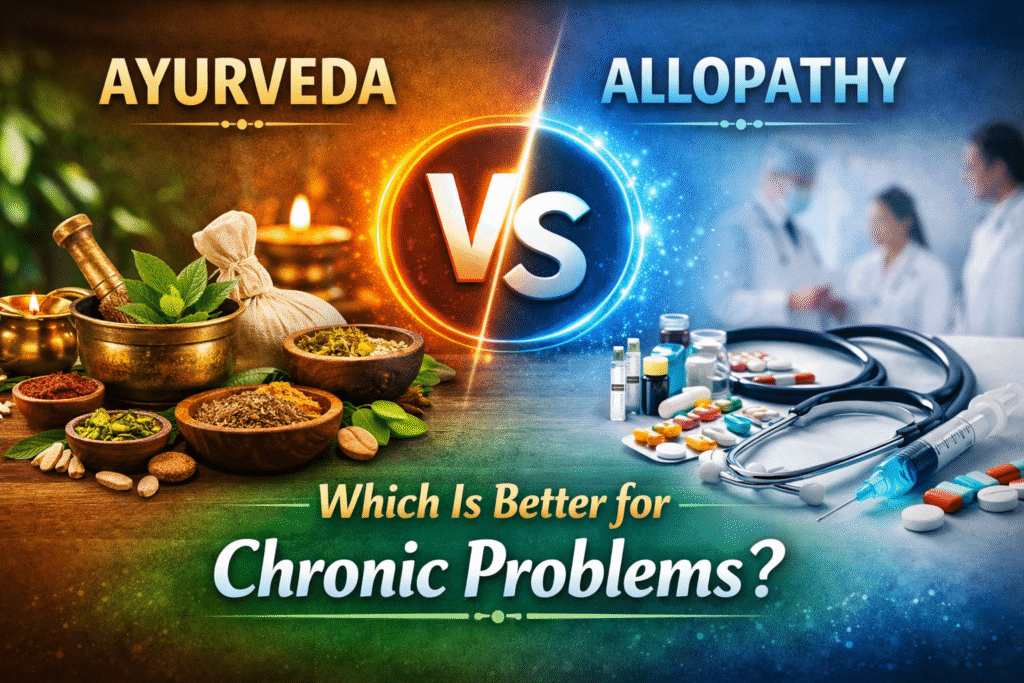
Today, many people are suffering from chronic health problems like diabetes, arthritis, asthma, thyroid issues, digestive problems, skin diseases, and long term body pain. These problems do not go away quickly and often need long term treatment. Because of this, people often feel confused between ayurveda vs allopathy and ask one common question: Which is better for chronic problems?
In this blog, we will explain ayurveda vs allopathy in simple words, so that anyone can understand the difference, benefits, side effects, and long term results.
What Is Ayurveda?
Ayurveda is an ancient Indian system of medicine. It believes that good health depends on balance in the body, mind, and lifestyle. Ayurveda works on three body energies called Vata, Pitta, and Kapha. When these are balanced, the body stays healthy.
Ayurveda treatment for chronic diseases focuses on finding the root cause of the problem. It uses natural herbs, oils, diet changes, daily routine, yoga, and stress control. Ayurveda does not only treat symptoms. It works slowly but deeply to improve overall health.
What Is Allopathy?
Allopathy is modern medicine that most people use today. It focuses on diagnosing diseases and treating symptoms quickly. Doctors use medicines, injections, and surgeries to control health problems.
Allopathy treatment for chronic diseases is helpful when fast relief is needed. It is very effective in emergencies and serious conditions. However, for chronic problems, medicines are often taken for a long time.
Difference Between Ayurveda and Allopathy
The main difference between ayurveda and allopathy is their approach to treatment.
Ayurveda treats the root cause of the disease and improves the body’s natural healing power. Allopathy mainly controls symptoms and gives quick relief. Ayurveda uses natural medicines, while allopathy uses chemical based drugs. Ayurveda usually has fewer side effects, but allopathy can cause side effects if medicines are taken for a long time.
Ayurveda vs Allopathy for Chronic Diseases
When we talk about long term health problems, the comparison becomes very important.
Ayurveda vs allopathy for chronic diseases shows that ayurveda is more suitable for long term care. Ayurveda works slowly but gives lasting results. It improves digestion, immunity, and lifestyle, which helps control chronic problems naturally.
Allopathy is useful to manage pain and symptoms quickly, but it often does not cure the problem completely. Many people need lifelong medicines, which can affect the body over time.
Ayurveda vs Allopathy: Benefits
Ayurveda Benefits
Ayurveda offers natural treatment vs allopathy. It improves overall health and energy levels. It focuses on prevention and long term healing. Ayurvedic treatment is personalized for each person.
Allopathy Benefits
Allopathy gives fast relief. It has advanced technology and accurate diagnosis. It is very important for emergencies and serious medical conditions.
Both systems have benefits, but their use depends on the health condition.
Ayurveda vs Allopathy Side Effects
Side effects are a big concern in long term treatment.
Ayurvedic medicine vs allopathic medicine shows that ayurvedic medicines usually have fewer side effects when taken properly. They are made from natural herbs and support the body gently.
Allopathic medicines may cause side effects like stomach problems, liver issues, or weakness if used for a long time. That is why many people prefer ayurvedic treatment for chronic diseases without side effects.
Ayurveda vs Allopathy for Diabetes and Arthritis
Diabetes and arthritis are common chronic problems.
In ayurveda vs allopathy for diabetes and arthritis, ayurveda focuses on improving metabolism, reducing inflammation, and strengthening joints naturally. It also helps control blood sugar levels with diet and lifestyle changes.
Allopathy helps manage sugar levels and pain quickly, but patients often need medicines for life. Ayurveda helps improve quality of life over time.
Ayurveda vs Allopathy for Long Term Treatment
If you are thinking about ayurveda vs allopathy for long term treatment, ayurveda is often considered safer. It supports natural healing, reduces medicine dependency, and helps prevent problems from coming back.
Allopathy is effective, but long term use may increase dependency on medicines.
Long Term Effects of Ayurveda vs Allopathy
The long term effects of ayurveda vs allopathy are very different. Ayurveda helps maintain balance in the body and mind. It supports healthy habits and improves immunity.
Allopathy controls disease, but stopping medicines suddenly can worsen symptoms. That is why ayurveda is preferred for chronic illness management.
Which Is Better: Ayurveda or Allopathy?
So, ayurveda vs allopathy which is better depends on the situation.
For emergencies and serious conditions, allopathy is the best choice.
For long term and chronic problems, ayurveda or allopathy for chronic problems usually favors ayurveda.
Many people now follow a balanced approach, using allopathy for emergencies and ayurveda for long-term health.
Conclusion
In the debate of ayurveda vs allopathy, both systems have their own value. For chronic diseases, chronic disease treatment ayurveda offers natural healing, fewer side effects, and long lasting results.
If you are looking for natural ayurvedic treatment for chronic illness, ayurveda can be a better option to improve overall health and quality of life.