

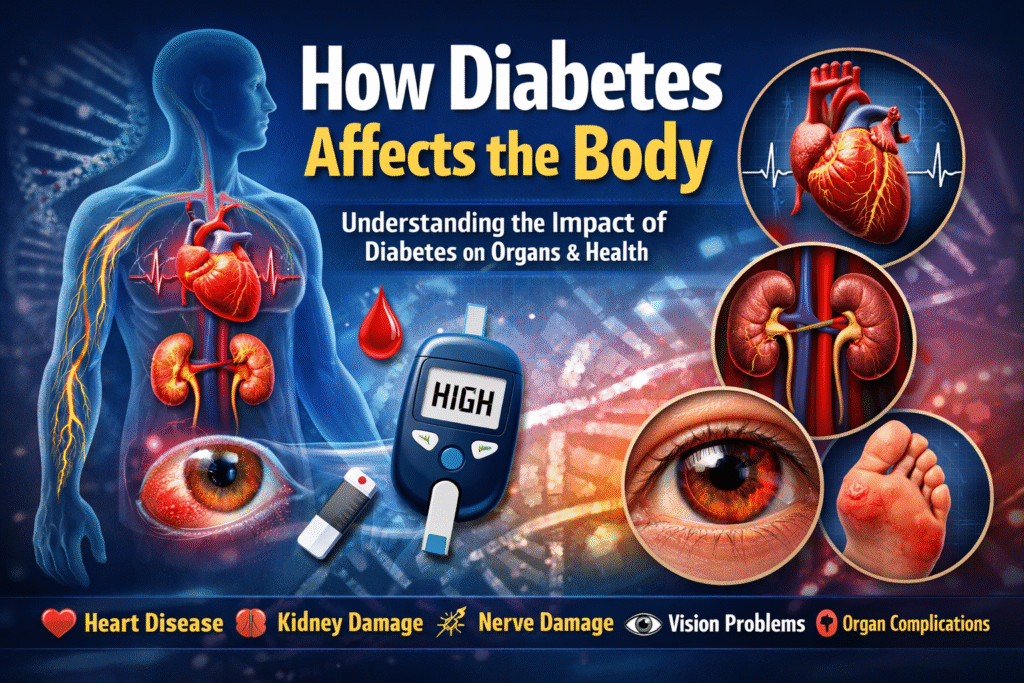
How Diabetes Affects the Body
Diabetes is a common health condition that affects millions of people worldwide. Many people only think diabetes means high sugar levels, but the truth is that how diabetes affects the body can be much more serious. When blood sugar levels remain high for a long time, it can slowly damage different organs and systems in the body. The effects of diabetes on the body can impact the heart, kidneys, nerves, eyes, and blood vessels.
Understanding how diabetes damages the body is very important because early awareness can help prevent serious complications. When diabetes is controlled properly, many of these problems can be avoided.
What Diabetes Does to Your Body
To understand what diabetes does to your body, we first need to understand how blood sugar works. The body uses a hormone called insulin to move sugar from the blood into the cells. The cells then use this sugar for energy.
However, in diabetes, the body either does not produce enough insulin or develops insulin resistance. This means the body cannot use insulin properly. As a result, sugar stays in the blood and causes high blood sugar levels.
Over time, how high blood sugar affects the body becomes dangerous because it damages blood vessels and nerves. This is why diabetes can lead to many health problems.
Diabetes Symptoms in the Body
Before serious damage happens, the body often shows some warning signs. These diabetes symptoms in the body can help people detect the condition early.
Some common symptoms include:
Frequent urination
Feeling very thirsty
Constant hunger
Feeling tired or weak
Blurred vision
Slow healing wounds
Tingling in hands or feet
These symptoms appear because the body cannot properly use sugar for energy. If diabetes is not controlled, these problems can lead to serious diabetes complications in the body.
How Diabetes Affects Different Organs of the Body
One of the biggest concerns with diabetes is how diabetes affects different organs of the body. High blood sugar slowly damages the blood vessels that supply oxygen and nutrients to organs. Over time, this causes diabetes damage to organs.
The most affected organs include the heart, kidneys, nerves, and eyes.
Effects of Diabetes on Heart
The effects of diabetes on heart can be very serious. Diabetes increases the risk of heart disease because high blood sugar damages the blood vessels and increases inflammation.
People with diabetes have a higher chance of developing diabetic heart disease. Some common heart-related problems include:
High blood pressure
Blocked arteries
Heart attack
Stroke
These are major long term effects of diabetes on the body, which is why heart health is very important for people living with diabetes.
Effects of Diabetes on Kidneys
Another serious diabetes effect on body organs is kidney damage. The kidneys filter waste from the blood, but high sugar levels damage the tiny blood vessels inside them.
This condition is known as diabetic kidney disease.
Common effects of diabetes on kidneys include:
Reduced kidney function
Protein leaking into urine
Swelling in legs or feet
Increased risk of kidney failure
If diabetes remains uncontrolled, the impact of diabetes on the body can become severe and may require dialysis or kidney transplant.
Effects of Diabetes on Nerves
One of the most common complications is nerve damage diabetes, also called diabetic neuropathy. High blood sugar damages nerves, especially in the legs and feet.
The effects of diabetes on nerves include:
Burning or tingling sensation
Numbness in hands and feet
Sharp nerve pain
Loss of sensation
Muscle weakness
This is one of the most common diabetes complications in the body, and it can increase the risk of foot injuries and infections.
Effects of Diabetes on Eyes
Diabetes can also cause serious eye problems. High blood sugar damages the small blood vessels in the eyes, leading to a condition called diabetic retinopathy.
Common effects of diabetes on eyes include:
Blurred vision
Eye pressure problems
Damage to the retina
Vision loss
This shows clearly how diabetes affects organs throughout the body. Regular eye checkups are important for people with diabetes.
How Diabetes Affects the Body Over Time
Many people do not realize how diabetes affects the body over time. The damage caused by high blood sugar usually happens slowly, sometimes over many years.
The long term effects of diabetes on the body may include:
Heart disease
Kidney disease
Nerve damage
Eye problems
Poor blood circulation
Increased infections
This explains how high blood sugar damages organs and leads to serious health issues if diabetes is not controlled.
Warning Signs Diabetes Is Affecting Your Body
Sometimes the body shows clear signals when diabetes starts damaging organs. These warning signs diabetes is affecting your body should never be ignored.
Some important signs include:
Constant tiredness
Numbness in feet
Blurred vision
Frequent infections
Slow wound healing
Swelling in legs
These signs show how uncontrolled diabetes affects the body and may indicate serious complications.
How to Reduce the Effects of Diabetes on the Body
The good news is that the effects of diabetes on the body can often be reduced with proper care and lifestyle changes.
Some helpful tips include:
Check blood sugar levels regularly
Eat a healthy and balanced diet
Exercise daily
Maintain a healthy weight
Follow your doctor’s advice
Take medicines on time
Proper management can prevent many diabetes complications and protect body organs.
Conclusion
Diabetes is a serious condition that can affect many parts of the body. Understanding how diabetes affects the body helps people take better care of their health. The effects of diabetes on the body can damage the heart, kidneys, nerves, and eyes if blood sugar remains uncontrolled.
However, with proper lifestyle changes, regular monitoring of blood sugar levels, and early treatment, many of these problems can be prevented. By managing diabetes properly, people can reduce the long term effects of diabetes on the body and live a healthier life.